Dubai continues to be one of the most stable real estate markets, following an unprecedented 215,700 property sales worth AED 686.8 billion in 2025 – its strongest performance ever. And amid this, off-plan sales dominate, representing 64.8 per cent of all residential transactions. In this kind of scenario, knowing how to verify a property's legal and construction standing is very important – and that's where the DLD property status system comes in.
Whether you are a first-time buyer, a seasoned investor, or a tenant signing a new lease, submitting a property status inquiry through the Dubai Land Department is an essential step you can take before committing to any real estate transaction.
This blog explains what property status means, and how it differs from a Dubai Land Department project status. It also tells you why these statuses are important, and shows you exactly what you need to do to get either a property or project status check completed.
Understanding the DLD property status and project status systems
The Dubai Land Department (DLD) manages two distinct but related enquiry services, which together form a crucial element of due diligence. They are:
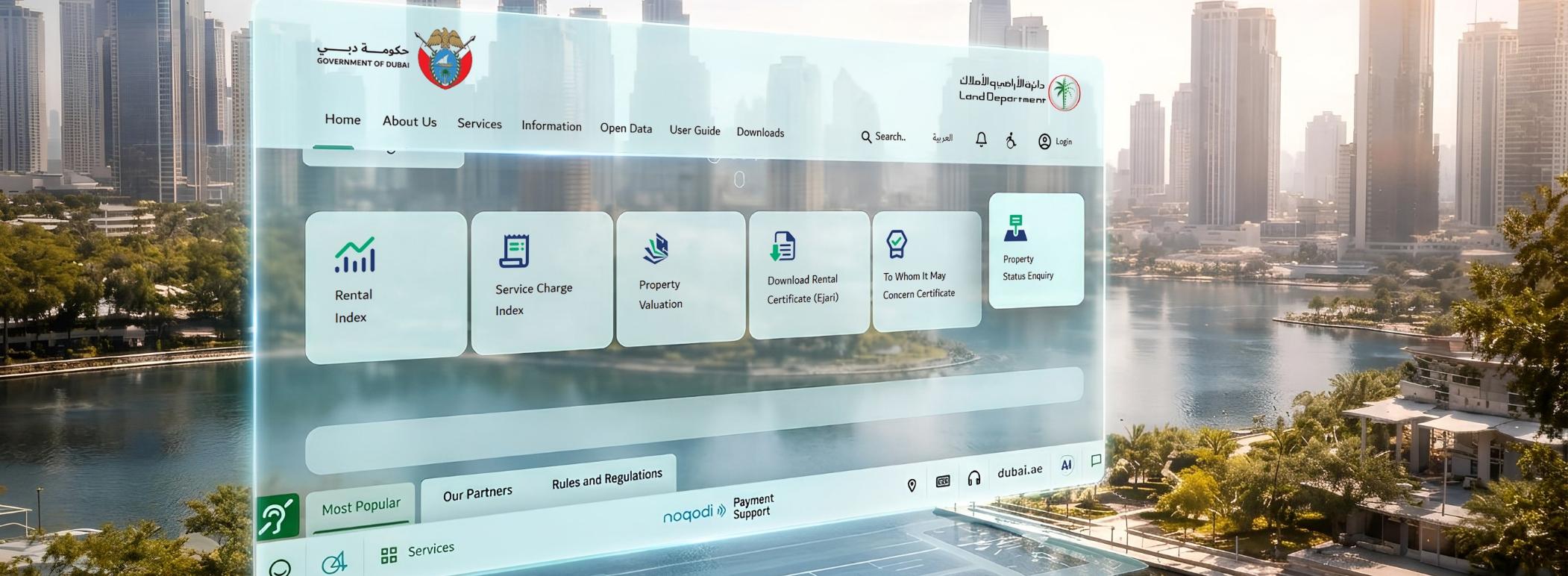
- Property Status Inquiry: This service allows a customer to inquire about the status of a property by entering property-related data such as the area and land number. Once the relevant data is provided, the user gets access to ownership details, existing mortgages, and any legal encumbrances on a registered unit.
- Project Status Enquiry: This service helps buyers know about the project's completion percentage, stay updated on project development, and track any concerning changes to completion dates. It is especially important for off-plan purchases.
Both services are available on the official DLD website and through the Dubai Real Estate Self-Transaction (REST) App, available on iOS and Android.
Understand the full process of purchasing a property by reading our beginner’s guide to buying property in Dubai, covering key steps, costs, and considerations.
Why it’s important to check Dubai Land Department property status in 2026
Dubai’s resilient real estate sector is a fast-moving environment, which means it’s crucial for any investor or buyer to keep up to date with all property details, including any potential errors, disputes, or misrepresented listings.
For buyers of ready properties, a property status check will confirm:
- If the seller is the legitimate registered owner
- If there are any outstanding mortgages or financial charges on the unit
- If any active legal disputes are linked to the property
- If a title deed has been validly issued by the DLD
For buyers of off-plan units, the Dubai Land Department project status tool adds an additional layer of protection. It shows real-time updates on construction progress, escrow account registration, and developer compliance, thus helping buyers access verified information directly from the government.
For tenants, DLD property status verification before signing a lease ensures the landlord is the actual registered owner and that no legal or financial disputes could disrupt the tenancy.
How to check Dubai Land project status & property status: Step-by-step process
There are 3 ways to check the status of any project or property in Dubai:
Via the Dubai Land Development Website
- Visit dubailand.gov.ae and navigate to e-Services
- Select either Property Status Enquiry or Project Status Enquiry
- Enter the required details:
- For property status: area name and land/plot number
- For project status: project name or registered project number
- Press ‘Submit’
Via the Dubai REST App
- Download the Dubai REST Application from the App Store or Google Play
- Then access Project Status (Mashrooi) from the Home Screen or Services Menu.
- The app also supports UAE Pass login, making authentication seamless for UAE residents.
Via WhatsApp
- Save the DLD helpline number 800-4488
- Open a WhatsApp conversation, and interact with Malik, the department's AI-powered virtual assistant, for any status enquiry.
Verifying property ownership details using the Dubai REST App or through the official DLD website is completely free of charge.
Compare off-plan and ready properties in Dubai to determine which option best aligns with your investment timeline and financial goals.
Dubai Land Department project status report details
When you run a Dubai Land project status inquiry, the report shows the following data points:
- Project name and number as registered with the DLD
- Completion percentage as verified through physical site inspections
- Expected handover dates
- Developer details including the Real Estate Regulatory Agency (RERA) registration status
- Escrow account information that confirms if the funds are held securely
- Management company details for jointly owned properties
The DLD works with developers and consultants to monitor construction progress on registered projects. Updates are submitted regularly and verified through inspections and financial tracking, then published on the DLD portal and Dubai REST App.
Common issues and how to handle them
Here are some of the common challenges property buyers or owners may face, and what to do if that happens:
- Discrepancies in records: If there is any discrepancy between the actual property and the details of the same listed in the contract, then stop the transaction and seek legal advice immediately.
- Delayed data updates: New transactions occasionally take time to appear. But if it is more than 3 days, then contact the DLD directly at 800-4488 or via the support portal.
- Off-plan resales: Verify the Oqood registration (the interim ownership registration for off-plan properties) alongside the standard property status inquiry to confirm a clean transfer.
- Cancelled projects: The DLD maintains records of cancelled developments. If a project appears inactive, use the official portal to confirm its status before making any payment.
Learn the key differences between freehold and leasehold ownership in Dubai to choose the structure that suits your investment strategy.
Frequently Asked Questions (FAQs)
1. How do I check my property status in Dubai?
The DLD property status or project status can be verified by submitting a request on the DLD website, Dubai REST app, or contacting the DLD via WhatsApp on their helpline number 800-4488. After user verification, enter the area or land number, and any other details required, and click Submit to see the results.
2. How do I check my property status in Abu Dhabi?
In Abu Dhabi, the equivalent of the DLD property status system is operated by the Abu Dhabi Real Estate Centre (ADREC). Also, Madhmoun is Abu Dhabi's first verified MLS (Multiple Listing Service) platform, which allows buyers to discover properties and verify listings officially before transacting.
3. What happens if a Dubai project is cancelled?
The DLD and RERA have defined buyer-protection procedures for cancelled projects. Details of affected projects are listed on the official DLD portal. Buyers should contact the Rental Dispute Centre or seek legal counsel for recovery of funds.
4. Can a tenant check property status in Dubai?
Yes. Tenants are encouraged to verify their DLD property status before entering into a lease contract, to confirm the landlord's ownership and ensure no legal encumbrances could affect the rental agreement.