When a Dubai tenancy approaches renewal, one of the most common questions is whether the landlord can increase the rent—and, if so, by how much.
The answer should not be based only on advertised listings, a broker’s opinion, or the rent being requested for another property in the same area.
Dubai Land Department provides an official Rental Index service, often referred to by tenants and landlords as the Dubai Rent Increase Calculator or RERA Rental Increase Calculator. The service allows users to check the applicable rental increase and review the relevant indexed rental value by entering information about the tenancy and property.
Dubai’s Smart Rental Index also uses artificial intelligence and a building-classification system to support more accurate and transparent rental assessments. It considers factors including rental-contract values, area averages, property quality, maintenance, services, and building classification.
For tenants, the system provides a way to assess whether a proposed increase is supported by the official framework.
For landlords, it provides a regulated reference when preparing a renewal.
However, index results alone are not enough. The timing of the landlord’s notice, the contract-expiry date, and the applicable legal framework also affect whether an increase can be applied.
What Is the Dubai Rent Increase Calculator?
The Dubai Rent Increase Calculator is an online service provided by the Dubai Land Department. Its official service name is the Rental Index.
The calculator allows a customer to determine:
- The indicative average rent for the relevant property category
- Whether the current rent falls below the indexed market average
- Whether a rental increase may apply
- The maximum percentage of increase permitted under the relevant framework
The service is available through:
- Dubai Land Department’s website
- The Ejari system
- Dubai REST
- Dubai Now
The result is displayed immediately after the required property and tenancy information is entered.
What Is the Dubai Smart Rental Index?
Dubai Land Department launched the Smart Rental Index in 2025 to strengthen transparency and fairness across the residential rental market.
Unlike an index based only on general area averages, the Smart Rental Index incorporates a building-classification system and a wider range of property data.
DLD states that the index evaluates buildings using criteria such as:
- Technical and structural characteristics
- Quality of finishes
- Maintenance standards
- Strategic location
- Spatial value
- Services and facilities
- Cleanliness
- Parking management
The system also uses artificial intelligence and rental data to support standardized rental assessments across Dubai.
The index covers residential areas across the emirate, including principal residential districts, special development zones and free zones.
How the Dubai Rental Index Works
To use the official service, the customer enters details relating to the property and existing tenancy.
Dubai Land Department currently asks users to provide information including:
- Tenancy-contract expiry date
- Property type
- Area or location
- Number of bedrooms
- Current annual rent
The system then compares the current rent with the applicable indexed average.
The permitted increase is determined according to how far the existing rent falls below that average.
The calculator does not simply compare the property with one online listing.
The Smart Rental Index draws on wider property, building and market information to produce the applicable result.
How Much Can a Landlord Increase Rent in Dubai?
The maximum permitted increase is determined under Dubai Decree No. 43 of 2013.
The percentage depends on the difference between the property’s current annual rent and the average rental value of comparable units under the official index.
| Current Rent Compared with Indexed Average | Maximum Permitted Increase |
|---|
| Up to 10% below the average | No increase |
| 11% to 20% below the average | 5% |
| 21% to 30% below the average | 10% |
| 31% to 40% below the average | 15% |
| More than 40% below the average | 20% |
Under the current framework, the highest increase band is 20%, where the applicable conditions are met.
This does not mean every landlord can automatically apply a 20% increase.
The result depends on:
- The current contractual rent
- The official indexed average
- The applicable increase bracket
- Whether proper notice was provided
- The contract-renewal date
An Example of How the Calculation Works
Assume the following:
- Current annual rent: AED100,000
- Indexed average rent: AED130,000
The existing rent is approximately 23% below the indexed average.
This places the property within the 21%–30% bracket, meaning the maximum permitted increase would be 10%.
The maximum revised annual rent would therefore be:
AED100,000 + 10% = AED110,000
The landlord could not simply increase the rent directly to AED130,000 based on the indexed average.
The permitted percentage applies to the current contractual rent.
If the current rent were AED100,000 and the indexed average was AED105,000, the difference would be less than 10%. Under the official brackets, no increase would apply.
Is a Rental Increase Automatic?
No.
A calculator result showing that a property qualifies for an increase does not automatically change the tenancy contract.
Dubai Land Department’s Smart Rental Index guidance states that the landlord must notify the tenant of the proposed increase at least 90 days before the tenancy expires. If the property qualifies for an increase but the landlord did not provide the required notice, the increase is not applied for that renewal.
The index establishes the permitted increase.
The landlord must still follow the correct renewal and notification process.
What Is the 90-Day Rent Increase Notice Rule?
Article 14 of Dubai Law No. 33 of 2008 states that, unless otherwise agreed in the tenancy contract, a party wishing to amend any lease term must notify the other party at least 90 days before the contract expires.
This applies to changes such as a proposed rental increase.
For landlords, this means the notice should be:
- Issued on time
- Clear about the proposed change
- Sent through a documented communication channel
- Consistent with the official Rental Index result
For tenants, it is important to retain:
- The notice
- Date received
- Existing tenancy contract
- Ejari certificate
- Calculator result
- Renewal correspondence
A notice sent fewer than 90 days before expiry may not support an increase for that renewal, subject to the tenancy agreement and applicable legal position.
What If the Landlord Gave Notice but the Index Shows No Increase?
Providing notice does not create a right to increase rent if the index does not support one.
DLD’s guidance states that an increase applies only where:
- The landlord gave the required notice; and
- The Smart Rental Index confirms that the property qualifies.
If the official result shows no permitted increase, the landlord should not rely only on:
- Asking rents in the building
- Online listings
- A broker’s estimate
- A neighboring property’s new lease
- General market commentary
The relevant renewal calculation should be checked using the official DLD service.
Rental Index vs Advertised Market Rent
Advertised rents can be useful for understanding what landlords are currently asking for similar properties.
They do not necessarily establish the permitted increase for an existing tenancy renewal.
Listings may differ because of:
- Property condition
- Furnishing
- View
- Floor
- Layout
- Building quality
- Landlord pricing strategy
- Whether the unit is vacant
- Whether the asking price has been accepted by a tenant
The Smart Rental Index is the official reference used to determine whether a rental increase may apply at renewal and the applicable maximum percentage.
Dubai Land Department states that the index is indicative for a new lease but is relevant when parties are in dispute regarding the increase applicable at renewal.
This distinction is important:
- A landlord and new tenant may negotiate the rent for a vacant property.
- An existing tenancy renewal remains subject to the applicable rental-increase framework.
New Tenancy vs Existing Tenancy Renewal
The Rental Index does not operate in the same way for a new tenant and an existing tenant.
New Tenancy
For a vacant property entering into a new tenancy, the parties negotiate the annual rental value.
DLD’s guidance describes the index as indicative rather than mandatory for a new lease.
Existing Tenancy Renewal
For an existing tenant, the index is used to establish whether an increase may apply and the maximum permitted percentage.
The landlord must also comply with the applicable notice requirements.
The difference prevents an existing contractual rent from being replaced automatically by the highest current asking rent in the market.
Does the Index Apply Across All Dubai Residential Areas?
Yes.
Dubai Land Department states that the Smart Rental Index covers all residential areas in Dubai, including:
- Main residential districts
- Special development zones
- Free zones
Decree No. 43 of 2013 also states that the rental-increase framework applies to private and public landlords across Dubai, including special development zones and free zones.
Where a property is subject to a specialized legal or contractual framework, the parties should verify the applicable position through official channels or obtain professional advice.
How Building Classification Affects the Rental Index
One of the major differences between the Smart Rental Index and earlier area-based approaches is the use of building classification.
DLD’s system evaluates buildings based on criteria including:
- Construction quality
- Architectural design
- Energy efficiency
- Maintenance
- Services
- Strategic location
- Parking and facilities
This means properties within the same broad area may receive different indexed rental assessments where their building characteristics, conditions, and services differ.
DLD also states that an owner or landlord can submit a request to update a building’s classification.
For tenants and landlords, the result should therefore be checked for the specific property rather than inferred from the area alone.
How to Check Your Permitted Rent Increase
Step 1: Gather the Tenancy Information
Prepare:
- Ejari contract
- Contract-expiry date
- Property type
- Area
- Number of bedrooms
- Current annual rent
Step 2: Open the Official Rental Index
Use:
- DLD website
- Ejari system
- Dubai REST
- Dubai Now
Step 3: Enter the Property Details
Make sure the information matches the registered tenancy.
Incorrect location, bedroom count, or rental value can produce an inaccurate result.
Step 4: Review the Result
The service displays the relevant market information and the permitted increase, where applicable.
Step 5: Save the Evidence
Retain:
- Save or retain the result where the platform allows
- Date checked
- Tenancy contract
- Notice correspondence
- Renewal communication
The index may be updated, so recording when it is checked can be useful during a renewal discussion.
How Ejari Supports the Calculation
Ejari provides the official record of the tenancy contract.
It includes key information such as:
- Property
- Landlord
- Tenant
- Contract dates
- Annual rent
- Ejari contract number
Dubai Land Department’s Rental Index service asks users to enter information that should correspond with the registered tenancy.
Tenants and landlords should therefore ensure that:
- The Ejari information is accurate
- The annual rent matches the signed agreement
- The contract dates are correct
- The property details are current
- Renewal terms are documented properly
An incorrect Ejari record can complicate the renewal process.
What Tenants Should Do When Receiving an Increase Notice
Tenants should avoid accepting or rejecting the notice immediately without checking the official position.
A practical process is:
- Confirm the date the notice was received.
- Calculate whether it was issued at least 90 days before expiry.
- Check out the Smart Rental Index.
- Compare the requested percentage with the permitted result.
- Review the tenancy agreement.
- Respond in writing.
- Retain all documents and communication.
If the proposed increase exceeds the official result, the tenant can ask the landlord or property manager to revise the renewal terms.
Where the parties cannot agree, they may need to use the relevant Rental Disputes Center process or obtain legal guidance.
What Landlords Should Do Before Issuing a Notice
Landlords should:
- Check the latest official Rental Index
- Confirm the current Ejari rent
- Review the contract-expiry date
- Calculate the notice deadline
- Ensure any proposed increase does not exceed the permitted percentage
- Issue the notice clearly and in writing
- Keep proof of delivery
- Avoid relying solely on online asking rents
- Recheck the index before finalizing the renewal
The landlord should also consider the wider commercial position.
The maximum permitted increase is not necessarily the only possible outcome.
Tenant retention, vacancy risk, maintenance requirements, and the property’s condition may influence the renewal discussion.
Common Rent Increase Calculation Mistakes
Applying the Percentage to the Indexed Average
The permitted percentage applies to the current contractual rent, not directly to the market average.
Assuming Every Property Qualifies
Properties priced within 10% of the indexed average do not qualify for an increase under the official brackets.
Missing the 90-Day Notice Deadline
An eligible property may still not qualify for an increase at that renewal if the required notice was not provided.
Using an Online Listing Instead of the DLD Index
Advertised prices do not replace the official renewal calculation.
Entering Incorrect Property Details
Wrong area, bedroom or current rent data may produce an incorrect result.
Treating the Maximum Increase as Mandatory
The permitted percentage is a maximum. The parties may agree on a different amount within the applicable framework.
Confusing New-Lease Pricing with Renewal Rules
New leases and existing renewals do not operate in the same way.
Can a Tenant and Landlord Agree on a Different Rent?
The parties may negotiate renewal terms within the applicable tenancy framework.
Dubai tenancy law allows the landlord and tenant to reconsider or amend the rent before expiry. If they cannot agree, the appropriate tribunal may determine fair rent by reference to the applicable legal criteria.
Any agreed change should be:
- Written into the renewed tenancy contract
- Reflected accurately in Ejari
- Clear about payment dates
- Signed by the relevant parties
Informal verbal agreements can create uncertainty later.
What If the Tenant Disputes the Increase?
A disagreement should first be addressed through documented communication.
The tenant can provide:
- Rental Index result
- Tenancy contract
- Ejari certificate
- Date of landlord notice
- Proposed renewal terms
If the parties cannot resolve the issue, the Rental Disputes Center is the relevant judicial body for landlord–tenant disputes in Dubai.
Before filing a dispute, tenants and landlords may wish to obtain qualified legal advice regarding:
- Notice compliance
- Contract provisions
- Index result
- Renewal timing
- Supporting evidence
- Appropriate remedy
How the Smart Rental Index Supports Market Transparency
Dubai’s rental market recorded approximately 1.38 million registered tenancy contracts during 2025, with a combined value of AED126.4 billion. New and renewed contracts both exceeded 500,000, demonstrating the scale of the emirate’s rental sector.
Within a market of this size, a consistent rental-index framework helps:
- Standardize renewal assessments
- Reduce reliance on unverified asking prices
- Give tenants clearer guidance
- Give landlords an official reference
- Support informed renewal discussions
- Improve transparency
- Contribute to rental-market stability
DLD has linked the Smart Rental Index to its wider goals of fairness, transparency, and sustainable market development.
Why Property and Building Quality Matter
The Smart Rental Index recognizes that not every building offers the same residential experience.
Construction, maintenance, facilities, location, and services can influence the classification and rental assessment.
For owners, this reinforces the importance of:
- Regular maintenance
- High-quality common areas
- Cleanliness
- Building systems
- Parking management
- Resident services
- Amenity standards
For tenants, it highlights why the indexed value of one building may differ from another within the same neighborhood.
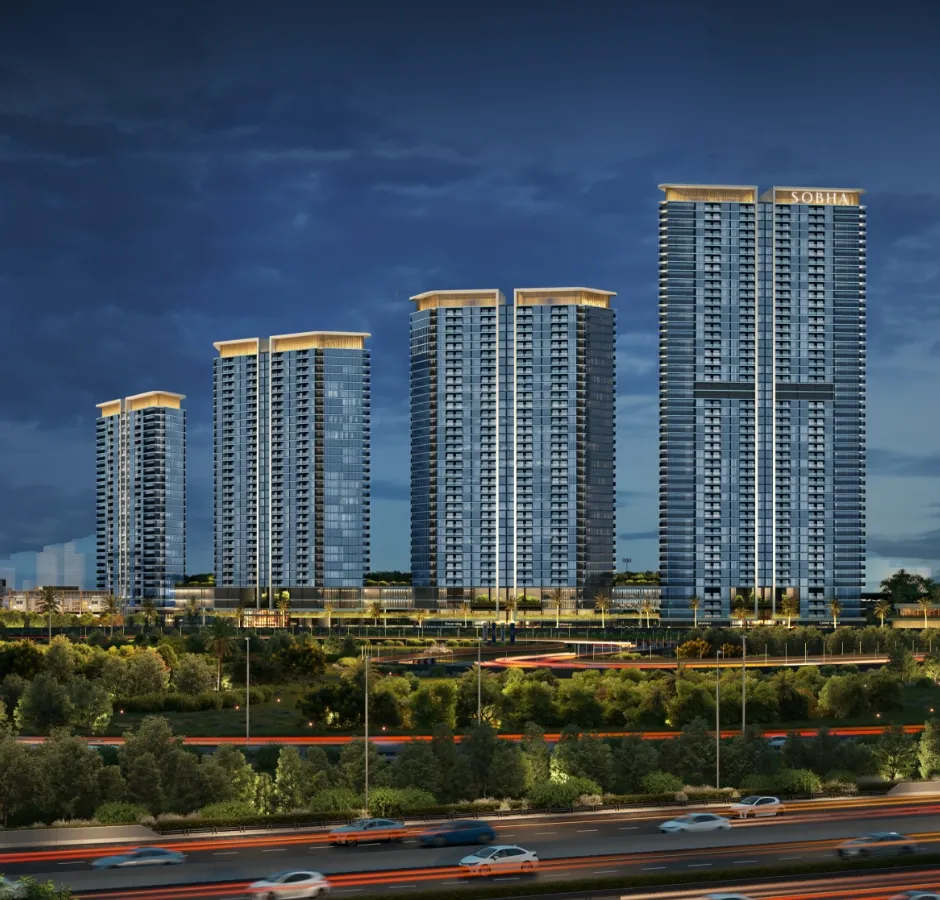
Sobha Realty’s approach is guided by “The Art of Detail” and its Backward Integration model, providing oversight across design, engineering, manufacturing, construction and finishing.
Rental assessment and tenant appeal can also be influenced by the quality, maintenance, and consistency of the completed living environment.
Dubai Rent Renewal Checklist
For Tenants
- Review the contract-expiry date
- Keep the Ejari certificate
- Record when the increase notice was received
- Check whether 90 days’ notice was provided
- Use the official DLD calculator
- Confirm the permitted percentage
- Compare it with the landlord’s request
- Respond in writing
- Retain all correspondence
- Register the renewed contract through Ejari
For Landlords
- Confirm the current registered rent
- Check the latest Smart Rental Index
- Calculate the 90-day deadline
- Issue the notice on time
- Apply only the permitted increase
- Retain proof of notice
- Review tenant-payment history
- Consider vacancy and retention
- Record agreed terms in the renewal
- Update Ejari accurately
Conclusion
The Dubai Rent Increase Calculator provides tenants and landlords with an official method for checking whether a residential property qualifies for a rental increase at renewal.
The calculation is based on the difference between:
- The current contractual rent
- The average indexed rental value
The maximum permitted increase ranges from:
- 0% where the rent is up to 10% below the average
- 5% where it is 11%–20% below
- 10% where it is 21%–30% below
- 15% where it is 31%–40% below
- 20% where it is more than 40% below
However, the calculator result is only part of the renewal process.
DLD’s guidance requires the landlord to provide the appropriate notice at least 90 days before expiry for an eligible increase to be applied.
For tenants, the appropriate approach is to verify the permitted increase before agreeing to renewal terms.
For landlords, the applicable index and notice requirements should be checked before proposing an increase.
For both parties, the renewal should be based on official information, clear communication, and accurate Ejari documentation.
A transparent rental relationship begins with a shared understanding of how the increase was determined.
Frequently Asked Questions
1. How do I calculate a rent increase in Dubai?
Use Dubai Land Department’s Rental Index through the DLD website, Ejari, Dubai REST or Dubai Now. Enter the contract expiry date, property type, location, number of bedrooms and current annual rent.
2. What is the maximum rent increase in Dubai?
The maximum permitted increase is 20% where the current rent falls more than 40% below the applicable indexed rental value, subject to the notice and renewal requirements.
3. Can a landlord increase rent every year?
A landlord may propose an increase at renewal where the official index supports it and the applicable notice requirements have been followed. An increase is not automatically permitted every year.
4. How much notice is required for a Dubai rent increase?
Unless otherwise agreed in the tenancy contract, a party seeking to amend the lease terms must provide at least 90 days’ notice before contract expiry.
5. What happens if the landlord misses the 90-day notice period?
DLD’s Smart Rental Index guidance states that an increase is not applied where the property qualifies under the index, but the landlord did not provide notice at least 90 days before expiry.
6. Is the RERA Rental Index mandatory for a new tenancy?
DLD states that the index is indicative for a new lease. It becomes relevant when determining permitted increases for existing tenancy renewals and where the parties disagree.
7. Does the Rental Index apply in Dubai free zones?
DLD states that the Smart Rental Index covers residential areas across Dubai, including free zones and special development zones.
8. Does the calculator use asking rents from property portals?
The Smart Rental Index uses official rental data and building classification factors. Advertised asking rents do not replace the official renewal calculation.
9. Can two apartments in the same area receive different index results?
Yes. Building classification, quality, maintenance, facilities, location, and property details can affect the indexed assessment.
10. Where can a tenant dispute increase?
Where the landlord and tenant cannot reach an agreement, disputes may be brought before Dubai’s Rental Disputes Center. Independent legal advice may be appropriate before filing.
Explore Sobha Realty’s thoughtfully designed communities across Dubai, where exceptional craftsmanship, considered planning and professionally managed residential environments designed around quality, functionality and resident experience. For tenancy renewals, always verify the latest permitted increase through the Dubai Land Department’s official Rental Index.