Verifying property ownership is one of the most important steps in a Dubai real estate transaction.
Before transferring a deposit, signing a sale agreement or completing the ownership transfer, a buyer should confirm that the title deed is genuine, that the property details match the transaction and that the person presenting the property has the legal authority to sell it.
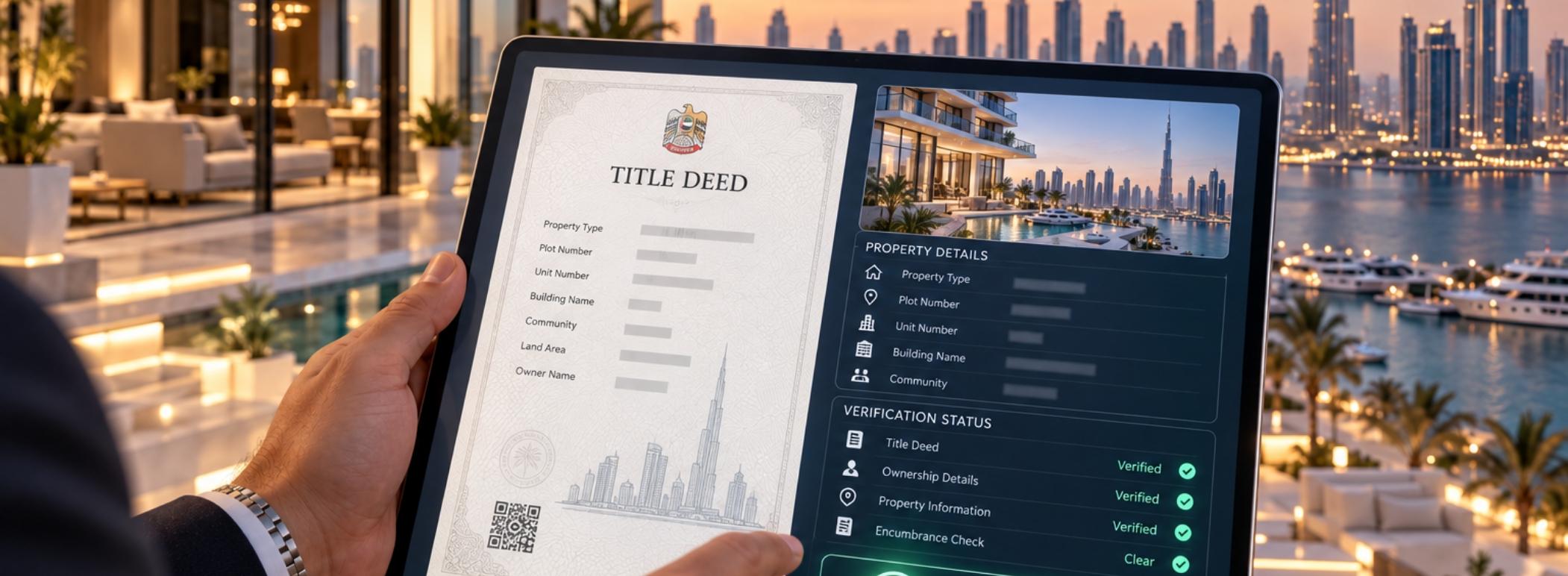
Dubai Land Department, or DLD, provides an instant title deed verification service through its website and the Dubai REST application. The service allows users to validate a property or validate the owner and property using information from the title deed. DLD’s digital verification page also states that its electronic title-deed certificates are digitally validated through blockchain.
However, title-deed verification is only one part of due diligence.
A title deed confirms registered ownership, but buyers may also need to review mortgages, seizures, suspensions, project information, tenancy status, service charges, developer approvals and the seller’s legal authority.
A well-informed buying decision should combine title-deed verification with a broader review of the property and transaction.
What Is a Dubai Property Title Deed?
A title deed is the official electronic ownership document issued through the Dubai Land Department once the relevant property ownership has been formally registered.
For a standard completed-property sale, DLD’s registration process results in the issuance of:
- An electronic title deed
- An electronic property map
- Applicable fee statements and receipts
The title deed is therefore different from:
- A reservation form
- A booking receipt
- A Sales and Purchase Agreement
- A tenancy contract
- An Ejari certificate
- An off-plan provisional registration certificate
- A broker’s listing
- A property advertisement
These documents may form part of a transaction, but they do not replace the official ownership record issued by DLD.
When Is a Title Deed Issued?
A new title deed is typically issued when a completed property is registered or transferred to its new owner.
For a standard resale transaction, the buyer and seller complete the registration process through an authorised Real Estate Registration Trustee Centre. Once the transaction is approved and fees are paid, DLD issues the new electronic title deed and property map.
Qualifying property sales can also be completed digitally through Dubai Now. The service allows eligible parties to create and sign the sale agreement, transfer the purchase amount and fees through an approved escrow account, and view the new title deed electronically after completion.
The title deed should show the registered ownership position after the transfer rather than the previous owner’s details.
Title Deed vs Oqood Certificate
Buyers should understand the distinction between a completed property title deed and an off-plan registration certificate.
Title Deed
A title deed is issued for a property whose ownership has been registered in the main real estate register.
It is commonly associated with:
- Completed apartments
- Completed villas
- Registered land
- Resale-property transfers
- Completed ownership transactions
Oqood or Provisional Registration Certificate
Off-plan units are registered through DLD’s provisional real estate register.
The developer registers the signed off-plan sale through the Oqood portal, and the purchaser receives a provisional registration e-certificate. DLD requires the signed off-plan sale agreement to be registered in the provisional register within 90 days of signing.
An Oqood certificate is therefore not the same as a completed property title deed.
It confirms the buyer’s provisionally registered interest in the off-plan transaction while the property remains under development, or the purchase price has not been fully paid.
Buyers should not expect an off-plan property still under construction to have the same title deed as a completed unit.
Why Title Deed Verification Matters
Title-deed verification helps buyers confirm that the document being presented corresponds with DLD’s official records.
It can help identify situations where:
- The title deed number is incorrect
- The certificate year does not match
- The property type differs from the proposed transaction
- The seller’s name does not match the registered owner
- An outdated or altered document has been presented
- The property details require further investigation
The verification should be completed through the official DLD website or Dubai REST rather than through an image, screenshot, or third-party link.
A visually convincing document should not be accepted without checking the official record.
How to Verify a Dubai Title Deed Online
DLD’s verification service is available instantly through:
- Dubai Land Department’s website
- Dubai REST
The online service currently provides two verification options:
- Validate Property
- Validate Owner and Property
Validate the Property
To validate the property, the user enters:
- Title deed number
- Title deed year
- Property type
The system then checks the information against the DLD record.
Validate the Owner and Property
To verify both ownership and property information, the user enters:
- Title deed number
- Title deed year
- Property type
- Owner name
This second option is particularly relevant before a purchase because it helps confirm that the owner's name presented by the seller corresponds with the title-deed information.
A Step-by-Step Title Deed Verification Process
Before proceeding with a property transaction:
Step 1: Request the Current Title Deed
Ask the seller or authorized representative for the latest electronic title deed.
Avoid relying only on:
- An old, printed copy
- A cropped screenshot
- A low-resolution image
- A broker-created summary
- An unofficial ownership letter
Step 2: Review the Document Details
Check the information shown on the title deed, including:
- Title deed number
- Year
- Owner name
- Property type
- Unit or property identifiers
- Ownership details shown on the certificate
Step 3: Open the Official DLD Verification Service
Use the DLD website or Dubai REST.
Do not use a link provided by an unverified third party where the domain or destination cannot be confirmed.
Step 4: Enter the Title Deed Information
Enter the title deed number, year and property type.
Where the buyer is verifying the seller’s ownership, enter the owner's name.
Step 5: Compare the Result
Confirm that the verified information matches:
- The title deed provided
- The seller’s identity
- The property being viewed
- The unit in the sale agreement
- The developer and community
- The transaction details
Step 6: Stop If Information Does Not Match
Do not transfer funds or sign final transaction documents until the discrepancy has been explained and independently resolved.
What Does Blockchain Validation Mean?
DLD’s title-deed verification page indicates that the electronic certificate has been digitally validated through blockchain.
For buyers, this supports digital authentication of the title-deed certificate through the official system.
However, blockchain validation should not be misunderstood.
It does not automatically confirm:
- That the seller has settled all service charges
- That the property is vacant
- That no tenancy exists
- That the seller has disclosed all defects
- That the asking price is fair
- That no transaction dispute exists
- That a broker is authorized
- That the property is suitable for the buyer
It helps authenticate the official digital ownership document.
The wider transaction still requires additional due diligence.
Is Title Deed Verification Enough?
No.
The title deed confirms registered ownership, but it does not provide every piece of information a buyer may require.
Before purchasing, buyers may also need to investigate:
- Mortgage
- Court seizure
- Registration suspension
- Project information
- Developer NOC
- Service charges
- Tenancy
- Seller authority
- Property condition
- Transaction restrictions
For a more detailed official record, DLD provides a Detailed Property Report.
What Is the DLD Detailed Property Report?
Dubai Land Department’s Detailed Property Report is an approved electronic statement for one property.
It can include:
- Owner information
- Property information
- Mortgage information
- Seizure information
- Suspension information
- Project details
This makes it useful where a buyer needs information that goes beyond basic title-deed validation.
The service is currently available through:
- DLD website for individuals
- Dubai REST for individuals
- Real Estate Services Trustee Centers for individuals and companies
The published digital fee is:
- AED50 per statement
- AED10 Knowledge Fee
- AED10 Innovation Fee
The trustee-center charge is currently listed at AED120, including partner fees and VAT. The expected service time is approximately 10 minutes.
Fees and service procedures should be checked again before applying.
Title Deed Verification vs Detailed Property Report
| Service | Purpose | Key Information |
|---|
| Title Deed Verification | Confirm the validity of a title deed | Title deed, property and owner validation |
| Detailed Property Report | Review wider property status | Owner, property, mortgage, seizure, suspension and project information |
| Property Sale Registration | Transfer ownership | Issues the buyer’s new electronic title deed and map |
| Title Deed Modification | Correct registered owner information | Updates name, nationality, passport, birth and related ownership data |
A buyer may use more than one service depending on the transaction and required level of due diligence.
How to Check for a Mortgage or Restriction
A property may be registered to the seller while also being subject to:
- A mortgage
- A seizure
- A registration suspension
- Another restriction affecting transfer
A valid title deed should not by itself be treated as confirmation that the property is free from mortgages or other restrictions affecting transfer.
DLD’s Detailed Property Report can provide mortgage, seizure and suspension information.
Where a mortgage exists, the transaction may require:
- Bank liability letter
- Debt settlement
- Mortgage-release letter
- Mortgage-release registration
- Coordination between the buyer’s and seller’s banks
- Additional transfer steps
Buyers should verify the transfer route before signing a sale agreement or setting up a completion date.
Verify the Seller’s Identity and Authority
The name on the title deed should match the legal seller's name. For individuals, compare the registered owner details with:
- Emirates ID
- Passport where applicable
- Sale agreement
- Broker documents
- Transfer records
If the seller is represented by another person, verify:
- Power of attorney
- Identity of the representative
- Scope of authority
- Validity
- Attestation or legalization where applicable
Where a company owns the property, review:
- Trade license
- Company ownership documents
- Board or shareholder authority
- Authorized signatory
- Power of attorney where relevant
Title-deed verification confirms the registered owner.
It does not automatically prove that every person communicating on the owner’s behalf has authority to sell.
Check That the Property Matches the Sale Agreement
The property described in the sale agreement should correspond with the verified ownership record.
Compare:
- Project or building
- Unit
- Property type
- Plot or land information
- Parking or storage wherever included
- Seller name
- Ownership share
- Agreed property being transferred
A transaction should not proceed where:
- The viewed unit differs from the title deed
- Parking or storage is promised but not documented
- The seller's name differs without explanation
- The property type is inconsistent
- The sale agreement describes a different asset
Every discrepancy should be resolved in writing.
Electronic vs Printed Title Deeds
Dubai issues electronic title deeds as part of property registration services.
For completed property sale registration, DLD sends the electronic title deed and property map after the transaction is approved.
The electronic certificate is the document that should be verified through DLD.
A printed copy may be useful for reference, but the buyer should rely on the official digital verification result rather than assuming paper proves authenticity.
DLD also provides title-deed issuance and updating services where a current electronic document is required.
How to Correct Title Deed Information
Where owner information needs to be corrected or updated, DLD provides a Title Deed Modification service.
The service covers ownership-data changes including:
- Name correction
- Nationality update
- Passport-number update
- Date-of-birth update
- Place-of-birth update
The current published fees are:
- AED250 title-deed issuance fee
- AED10 Knowledge Fee
- AED10 Innovation Fee
The service is available through DLD’s main office and Real Estate Services Trustee Centers, with a published completion time of approximately 25 minutes.
A seller should resolve material ownership-data discrepancies before the transfer appointment where possible.
What Happens to the Title Deed When a Property Is Sold?
The seller’s title deed does not remain as the buyer’s proof of ownership after completion.
Once the sale has been formally registered, DLD issues a new electronic title deed in the buyer’s name.
For a standard trustee-center sale:
- Buyer and seller submit the required documents.
- The trustee enters and verifies the transaction.
- Applicable fees are paid.
- DLD approves the transfer.
- The electronic title deed and map are issued to the buyer.
The current published title-deed issuance fee within the standard sale service is AED250, with separate map, knowledge, innovation and service-partner charges.
Can a Title Deed Be Issued Digitally Through Dubai Now?
Yes, for qualifying transactions.
DLD’s Digital Sale service through Dubai Now allows eligible individuals to complete the sale using UAE Pass, transfer funds through an approved escrow account and view the new title deed electronically.
Current eligibility includes transactions where:
- The parties are eligible individuals holding UAE ID and using UAE Pass
- The property is in a freehold area
- The property is free from mortgages and other restrictions
- The property is a qualifying subdivided unit such as an apartment, office or townhouse
- The applicable payment is transferred through the approved escrow account
DLD’s launch guidance also identified single ownership and a UAE bank account among the requirements for the initial digital-sale model.
Properties outside these conditions may require another approved transfer process.
Title Deed Verification for a Mortgaged Property
A mortgaged property can still have a valid title deed.
The existence of a title deed does not mean the mortgage has been removed.
Before purchasing a mortgaged property:
- Obtain the bank liability letter
- Confirm the outstanding amount
- Understand the mortgage-release process
- Agree how the purchase price will be allocated
- Confirm the transfer procedure
- Review the Detailed Property Report
- Coordinate with both lenders where financing is involved
Where the buyer is financing the purchase, the resulting ownership documentation will reflect the applicable registered mortgage arrangements after completion.
DLD’s mortgage registration service can issue a title deed, usufruct title deed or provisional registration certificate depending on the property and transaction.
Title Deed Verification for a Tenanted Property
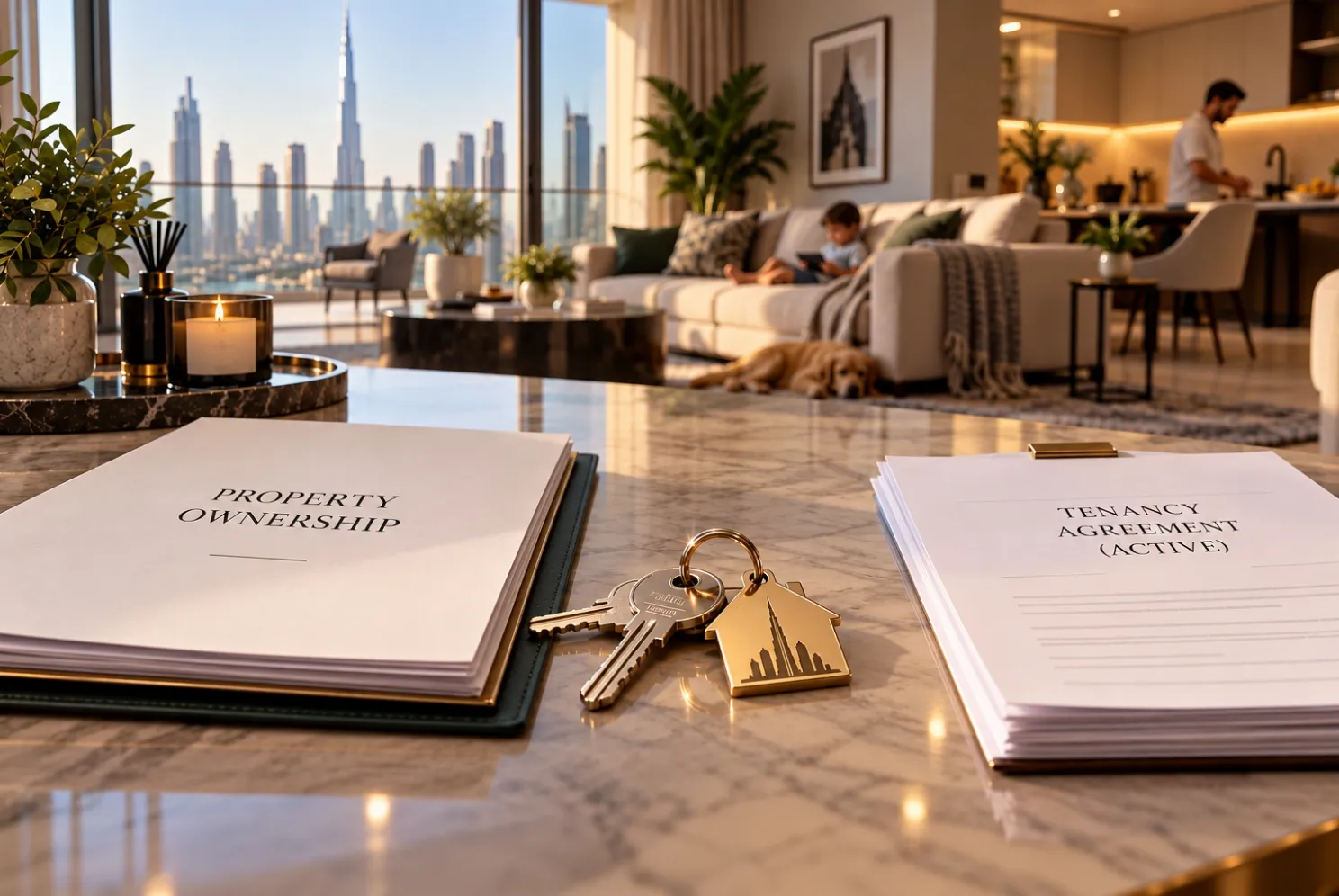
A valid title deed confirms ownership, but it does not cancel an active tenancy.
When buying a tenanted property, review:
- Ejari certificate
- Tenancy contract
- Contract expiry date
- Current annual rent
- Payment status
- Security deposit
- Renewal notices
- Eviction notices
- Rental disputes
The buyer should verify both:
- Who owns the property
- Who has the legal right to occupy it
The title deed addresses the first question.
The tenancy documents address the second.
Common Title Deed Verification Mistakes
Accepting a Screenshot Without Verification
Always check the document through DLD.
Verifying the Property but Not the Owner
Use the owner-and-property option where ownership confirmation is required.
Ignoring the Certificate Year
The title deed number and year must correspond with the document being checked.
Assuming the Title Deed Proves the Property Is Mortgage-Free
Use the Detailed Property Report and approved transfer process to investigate restrictions.
Confusing Oqood with a Completed Title Deed
Off-plan provisional registration and completed ownership registration are different.
Failing to Match the Unit with the Sale Agreement
The verified property must be the exact asset being purchased.
Ignoring Seller Authority
A representative must have valid legal authority to act for the owner.
Treating Verification as a Property Valuation
Title-deed verification confirms ownership information, not market value.
A Buyer’s Title Deed Verification Checklist
Before signing or paying:
- Request the latest electronic title deed
- Verify the title deed number, year and property type through DLD
- Use the owner-and-property verification option
- Match the seller’s identity
- Match the unit or plot with the sale agreement
- Request a Detailed Property Report where appropriate
- Check the official property status where additional restriction or dispute information is relevant
- Check mortgage, seizure and suspension information
- Review seller authority or power of attorney
- Confirm tenancy status
- Review service-charge position
- Verify the broker and advertisement
- Obtain the developer e-NOC where required
- Do not transfer funds until discrepancies are resolved
At transfer:
- Confirm the final property and owner information
- Review the transaction statement
- Pay through approved channels
- Obtain the DLD receipt
- Receive the buyer’s electronic title deed
- Download and securely retain the electronic map and title deed
- Verify the new certificate after issuance
Why Developer and Community Quality Still Matter
A genuine title deed confirms legal ownership.
It does not determine the quality of the home or community.
Buyers should also evaluate:
- Construction
- Materials
- Layout
- Maintenance
- Amenities
- Landscaping
- Connectivity
- Service charges
- Community management
- Market demand and future supply
Sobha Realty’s approach is guided by “The Art of Detail” and its Backward Integration model, providing direct oversight across design, engineering, manufacturing, construction and finishing.
Ownership verification confirms the legal record, while buyers should separately assess the quality, condition and characteristics of the property and community
Conclusion
Title deed verification in Dubai is an essential step before purchasing a completed property.
Dubai Land Department provides an instant digital service through its website and Dubai REST, allowing users to:
- Validate a property
- Validate the owner and property
- Confirm the title deed number, year and property type
- Verify the owner's name against the official record
For a broader review, buyers can request a Detailed Property Report containing ownership, mortgage, seizure, suspension, and project information. Buyers should also understand that:
- A title deed is different from an Oqood provisional registration certificate
- A valid title deed does not automatically mean the property is mortgage-free
- The title deed does not determine tenancy status
- The seller or representative must have authority to transact
- The property in the sale agreement must match the verified record
- A new electronic title deed is issued to the buyer after transfer
Property transactions should be based on verified information rather than assumptions.
Before buying, confirm who owns the property, what is being transferred, and whether any restriction could affect completion.
Frequently Asked Questions
1. How can I verify a Dubai title deed?
Use Dubai Land Department’s Title Deed Verification service through the DLD website or Dubai REST. Enter the title deed number, certificate year and property type.
2. Can I verify the property owner’s name?
Yes. DLD’s service includes a Validate Owner and Property option requiring the title deed details and owner name.
3. Is title deed verification free?
DLD’s verification page presents the service as an instant informational service and does not list a verification fee. Buyers should confirm current service terms when using the platform.
4. What is the difference between a title deed and Oqood?
A title deed records registered ownership of a completed property. Oqood provides provisional registration for off-plan sales or property whose price has not yet been fully paid.
5. Does a valid title deed mean the property has no mortgage?
No. A property can have a valid title deed and an active mortgage. Buyers can request a Detailed Property Report to review available mortgage and restriction information.
6. What is included in a DLD Detailed Property Report?
The report can include owner, property, mortgage, seizure, suspension, and project information for a single property.
7. How much does a Detailed Property Report cost?
The current digital fee is AED50 per statement plus AED10 Knowledge Fee and AED10 Innovation Fee. The trustee-center fee is listed as AED120 including partner fees and VAT.
8. Is a Dubai title deed electronic?
Yes. DLD property registration services issue electronic title deeds and property maps.
9. How do I correct information on a title deed?
Use DLD’s Title Deed Modification service for eligible corrections such as name, nationality, passport and birth details.
10. When does the buyer receive the new title deed?
The electronic title deed is issued after the property sale has been registered and approved through the applicable DLD transfer process.
Explore Sobha Realty’s thoughtfully designed communities across Dubai and discover homes shaped by craftsmanship, considered planning and attention to long-term quality. Before purchasing any property, verify all ownership and transaction information through the relevant Dubai Land Department channels.