Buying a property is among the biggest accomplishments for most people. Yet many buyers tend to focus on pricing and payment more than documentation. In particular, the one document that legalises ownership – the title deed.
Regardless of the property, be it a villa, an apartment or just a simple plot of land, the property title deed is the basis for everything else.
In this guide, we will explore the various facets of a title deed, including what it is, the details it contains, and why it is such a crucial document.
What is a title deed?
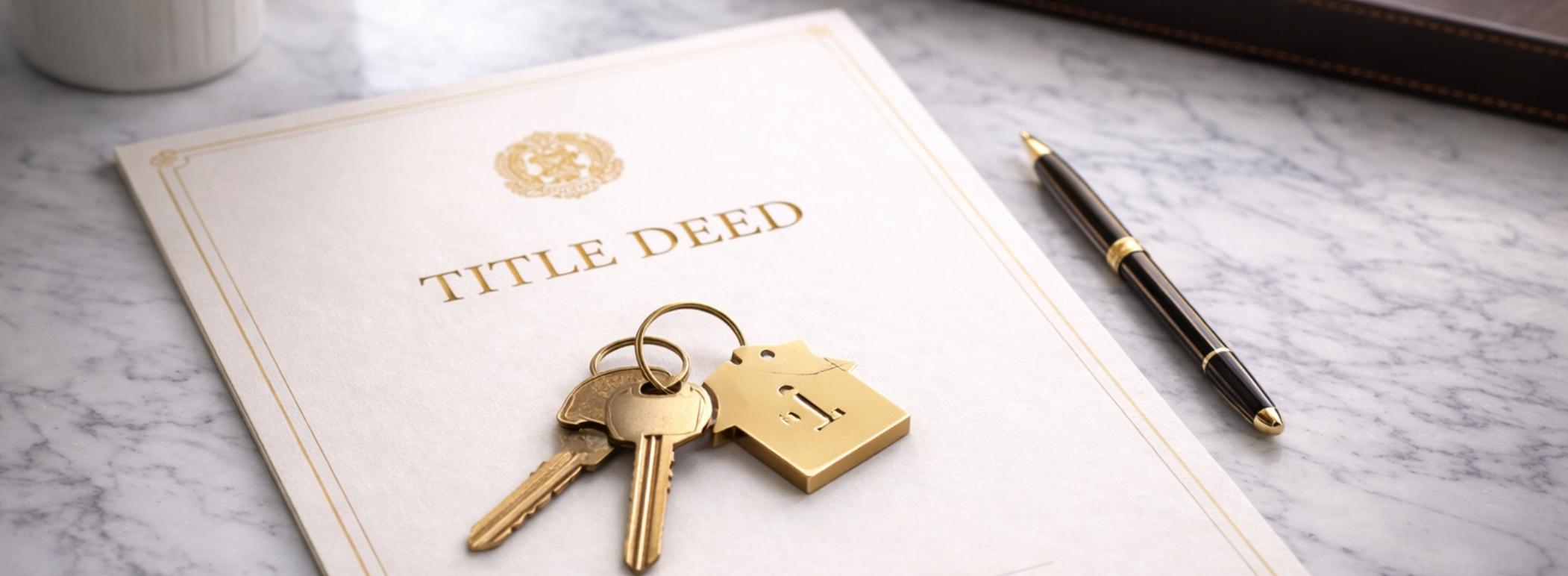
Before we dive into the many details of this document, it is imperative to know exactly what a title deed is. Issued by the Dubai Land Department (DLD) in Dubai, title deeds (also known as Mulkiya in Arabic) act as legally binding documents that officially establishes the owner of a certain property.
In simple terms, it is the government-recognised proof of ownership for any piece of real estate. These deeds are generally issued digitally and are the legal equivalent to their paper counterparts in official scenarios.
The title deed is not to be confused with the sale deed, which is the document that records the transfer of said property. In contrast, the title deed is usually issued after the transfer is officially registered and confirms the new owner’s rights to the property.
What does a title deed contain?
With so much importance given to this document, it helps to know what information it contains. Key details included with your title deed are:
- The owner's full legal name\
- A description of the property type (apartment, villa, townhouse, or plot)
- The nature of ownership (freehold, leasehold, etc.)
- Any relevant plot/map references
- The deed number
- A digital signature that allows verification by any party
Types of title deeds in Dubai
Just as there are different types of property ownership in the Emirate, there are also different types of title deeds, each one reflecting the extent of ownership over said property. These primarily consist of:
Freehold: Similar to the nature of ownership, this type of title deed provides the details of who has complete ownership of the property as well as the land it resides on. It also grants the holder with the rights to sell or lease the property.
Leasehold: As the name implies, leasehold deeds are documents that allow the holder to use a property for a specified period of time – usually up to 99 years. One key distinction between leasehold deeds and their freehold counterparts is that the former does not grant the holder the rights to the land.
Usufruct and Musataha: These are commonly seen in commercial scenarios. Usufruct deeds allow the holders to use and benefit from a third-party property for a specified period not exceeding 99 years, while Musataha allows the holder to build and benefit from the property up to 50 years.
Off-plan properties: In such cases where construction is in progress, buyers are given an Oqood certificate which gets changed to a proper title deed upon completion.
Understand the difference between freehold and leasehold ownership in Dubai to see how each type is reflected in your title deed.
Why is a Dubai title deed important?
The significance of this document cannot be overstated – your title deed is one of the most crucial pieces of documentation you need to have.
It serves three crucial functions:
Proof of ownership: A title deed is the only document that is universally recognised by entities such as courts, banks, and government authorities as conclusive, irrefutable evidence that you own a property.
Property transactions: The document provides owners with the rights to sell, mortgage, gift, or lease properties. This means any transactions attempted without presenting a valid, verified title deed can be legally challenged or invalidated.
Protection against disputes or fraud: One of the most important aspects of a title deed is that it prevents anyone from simply claiming, selling, or transferring your property without your consent. It serves as the strongest shield against fraud and any unauthorised dealings.
For foreign investors, holding a properly registered title deed is the difference between a secure asset and having your ownership challenged.
Learn the role of approved property registration trustees in Dubai and how they facilitate secure and official property transactions.
Conclusion
In the world of real estate, this document remains one of, if not the, most important aspect of ownership. While the excitement of a purchase often centres on location and luxury, a DLD issued title deed is what truly separates a buyer from a rightful owner.
It is far more than just a formal certificate. Title deeds are ironclad, government-recognised documents that protect their holder’s rights against fraud, validate authority to sell or mortgage, and provide the essential security required for long-term wealth preservation.
Additionally, they also serve as the primary evidence recognised by banks, courts, and other authorities, safeguarding the holder’s stake in the city’s skyline. For any savvy investor or homeowner, the title deed isn't just the final step in a transaction. It is the very foundation of property security and peace of mind in one of the world's most competitive markets.
Get a complete overview of the property purchase process in our beginner’s guide to buying property in Dubai.
Frequently Asked Questions (FAQs)
1. What is a title deed in Dubai?
A title deed in Dubai is a legally binding document issued by the DLD that confirms who owns a specific property. It is government-recognised proof of ownership and is required for any property transaction in the Emirate.
2. What is the difference between a title deed and a sale deed?
A sale deed records the transfer of a property from a seller to a buyer, while a title deed is issued after the transfer is registered and serves as the official confirmation of the new owner's rights.
3. Can foreigners get a title deed in Dubai?
Yes. Foreign nationals can obtain a title deed in Dubai, but only in designated freehold and leasehold areas approved by the government.